
Date:6’th April 2025 (Sunday)
Time: 9:30 AM to 1:00 PM
Venue:
VGLUG Office, No. 416, Ganapathi nagar, K.K. Road, Villupuram – 605 602
Location: https://maps.app.goo.gl /8SxpvcyA9CAuHYXG6?g_st=ic
Minutes of meeting
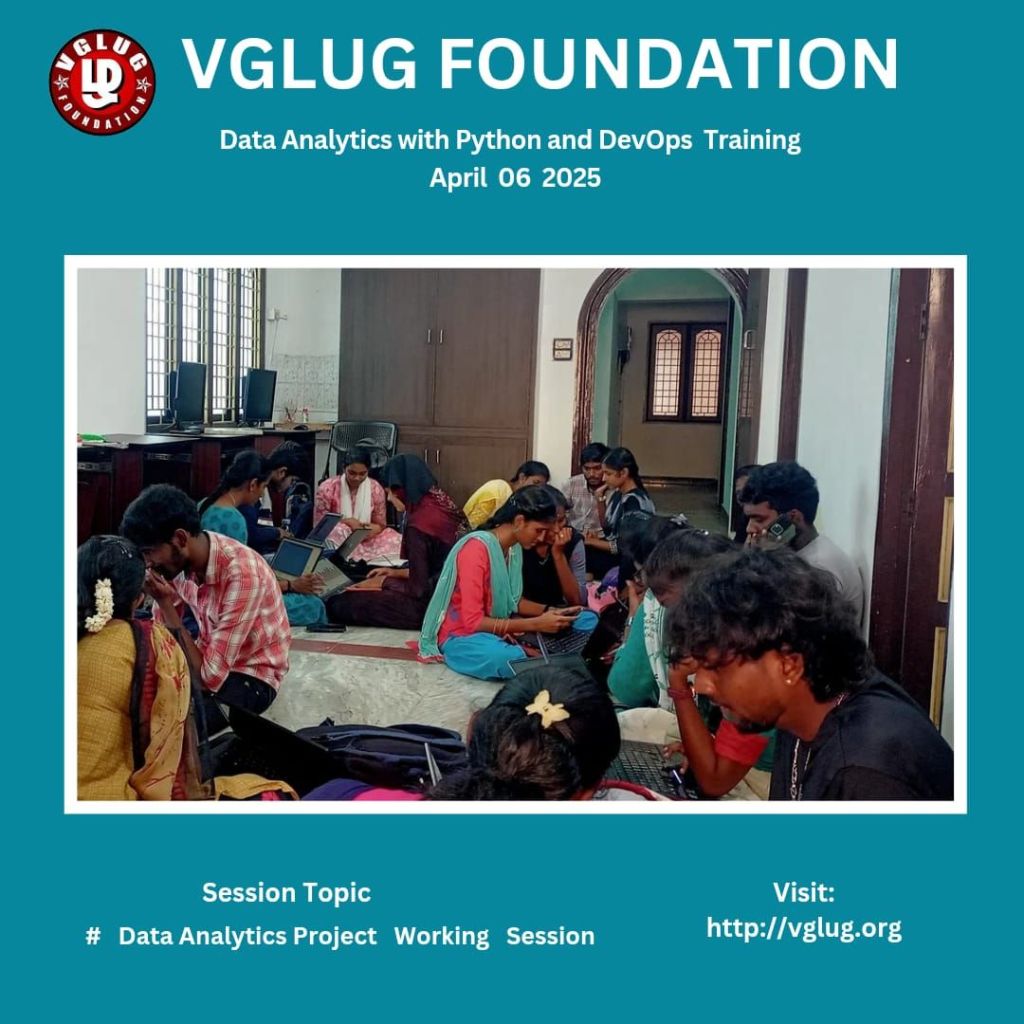
Data Analytics with Python Arts Team 1 , Team 2 & Engineering Team 1, Team 2
Topics:
- Session 1: Data analytics Project working session
Session 1:
Data analytics projects discussions :
Introduction:
Data Analytics is the process of analyzing raw data to uncover patterns, insights, and trends that help in decision-making. This discussion covers a data analytics project, including objectives, tools, workflow, and benefits.
Project Overview:
Project Name: Customer Behavior Analysis for an E-commerce Platform
Objective: To analyze customer purchase patterns, predict trends, and improve business strategies.
Scope:
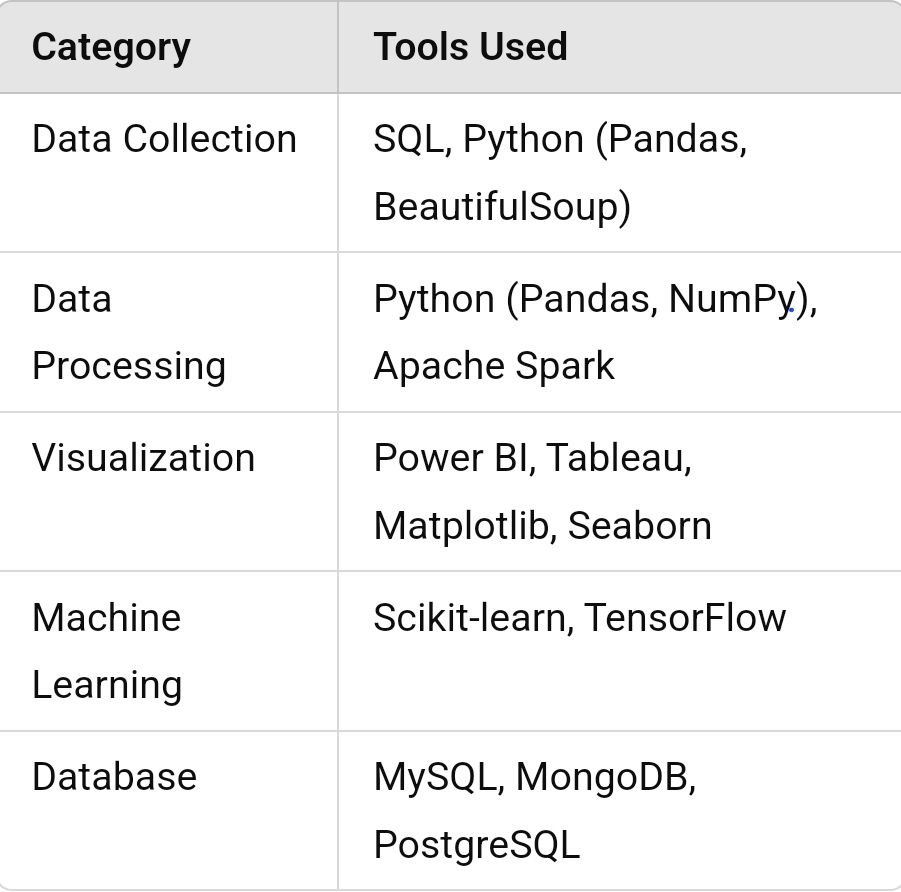
- Data collection from multiple sources
- Data preprocessing and cleaning
- Exploratory Data Analysis (EDA)
- Machine learning for predictions
- Visualization and reporting
Tools & Technologies
Workflow & Architecture:
Data Collection: Extract data from databases, APIs, and web scraping.
Data Cleaning & Preprocessing: Handle missing values, remove duplicates, and normalize data.
Exploratory Data Analysis (EDA): Identify trends, correlations, and insights.
Machine Learning Model: Predict customer behavior using classification and clustering techniques.
Visualization & Reporting: Generate dashboards for decision-making.
Challenges & Solutions:
Data Quality Issues: Implement data validation and cleaning processes.
Scalability: Use cloud-based solutions (AWS, Azure) for large datasets.
Privacy & Security: Ensure compliance with data protection laws (GDPR, CCPA).
Conclusion:
This project will help businesses leverage data to make informed decisions, improve customer experience, and drive growth. By implementing data analytics, organizations can turn raw data into valuable insights.
Project Discussion on DevOps
Introduction:
DevOps is a software development approach that integrates development (Dev) and operations (Ops) to enable continuous delivery, faster deployments, and high-quality software. In this discussion, we will explore a DevOps project, covering its goals, tools, workflow, and benefits.
Project Overview
Project Name: Automating CI/CD Pipeline for a Web Application
Objective: To implement a complete DevOps lifecycle that includes code integration, testing, deployment, and monitoring.
Scope:
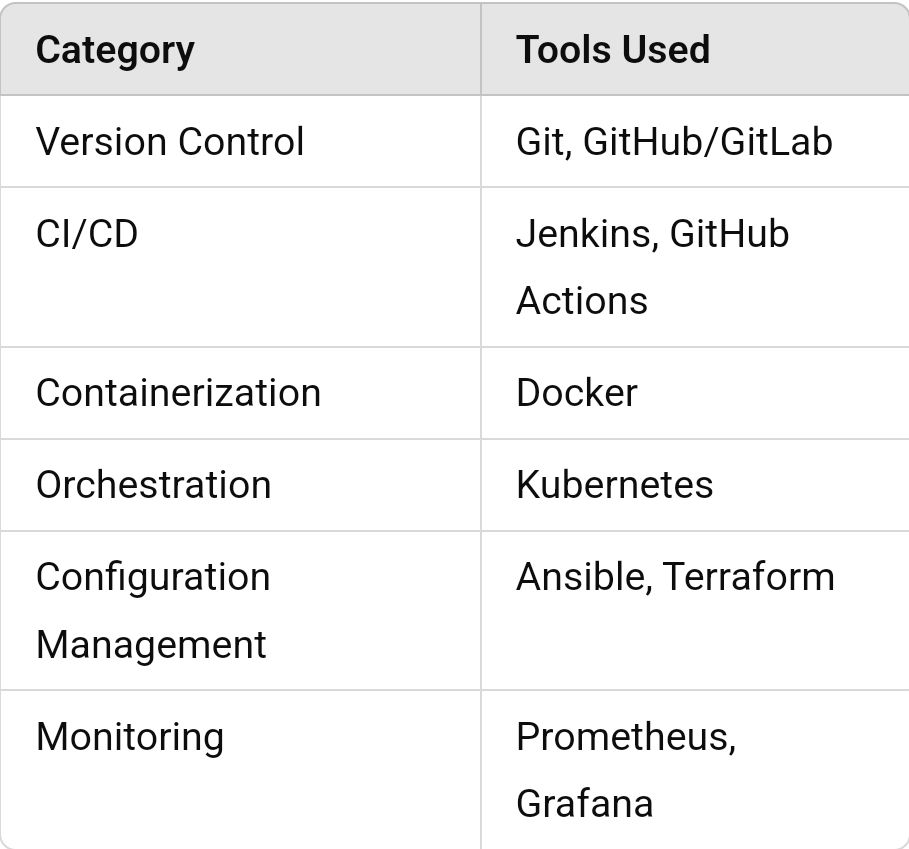
- Version control using Git
- Continuous Integration (CI) with Jenkins/GitHub Actions
- Continuous Deployment (CD) using Docker & Kubernetes
- Infrastructure as Code (IaC) with Terraform
- Monitoring with Prometheus & Grafana
Tools & Technologies
Workflow & Architecture:
- Developers commit code to a Git repository.
- CI Pipeline triggers: Jenkins/GitHub Actions builds and tests the code.
- Artifact is created and stored in a repository (Docker Hub/Harbor).
- CD Pipeline deploys the application using Kubernetes.
- Monitoring tools track performance, logs, and alerts.
Challenges & Solutions:
- Security Risks: Implement DevSecOps with security scanning tools (Snyk, SonarQube).
- Complexity in Kubernetes Management: Use Helm charts for easier deployment.
- Infrastructure Cost: Optimize resources with auto-scaling policies.
Conclusion:
Implementing DevOps in a project ensures a smooth, automated, and scalable development lifecycle. This project will help in delivering software efficiently while maintaining stability and security.

Acknowledgements
A big thanks to all the speakers: Muthuram, Prathap for sharing their knowledge. The sessions provided valuable insights and practical learning experiences.
Thanking you
VGLUG Volunteer

 VGLUG Foundation