
VGLUG is dedicated to empowering rural college students through technology education.
As part of this initiative, we conduct weekly training sessions on Python With GenAI and DevSecOps.
Python & GenAI – Linus Torvalds(Team 1) & Grace Hopper(Team 2): Assigned to Engineering students
Python & GenAI – Richard Stallman(Team 1) & Aron Swatz (Team 2): Assigned to Arts and Science students
DevSecOps – Ada Lovelace (Arts) & Bob Thomas (Engg): Comprising both Engineering and Arts students
These sessions focus on practical knowledge of Python, GenAI, DevSecOps, free and open-source tools, and also include social awareness and community engagement activities.
Python With GenAI Training – 26′ th Week Recap
Date: 04’th January 2026 (Sunday)
Time: 9:30 AM to 1:00 PM
Venue:
VGLUG Foundation
SRIMAA PRESCHOOL
Landmark: Opposite to BSNL Exchange
Villupuram 605602
Minutes of the Meeting
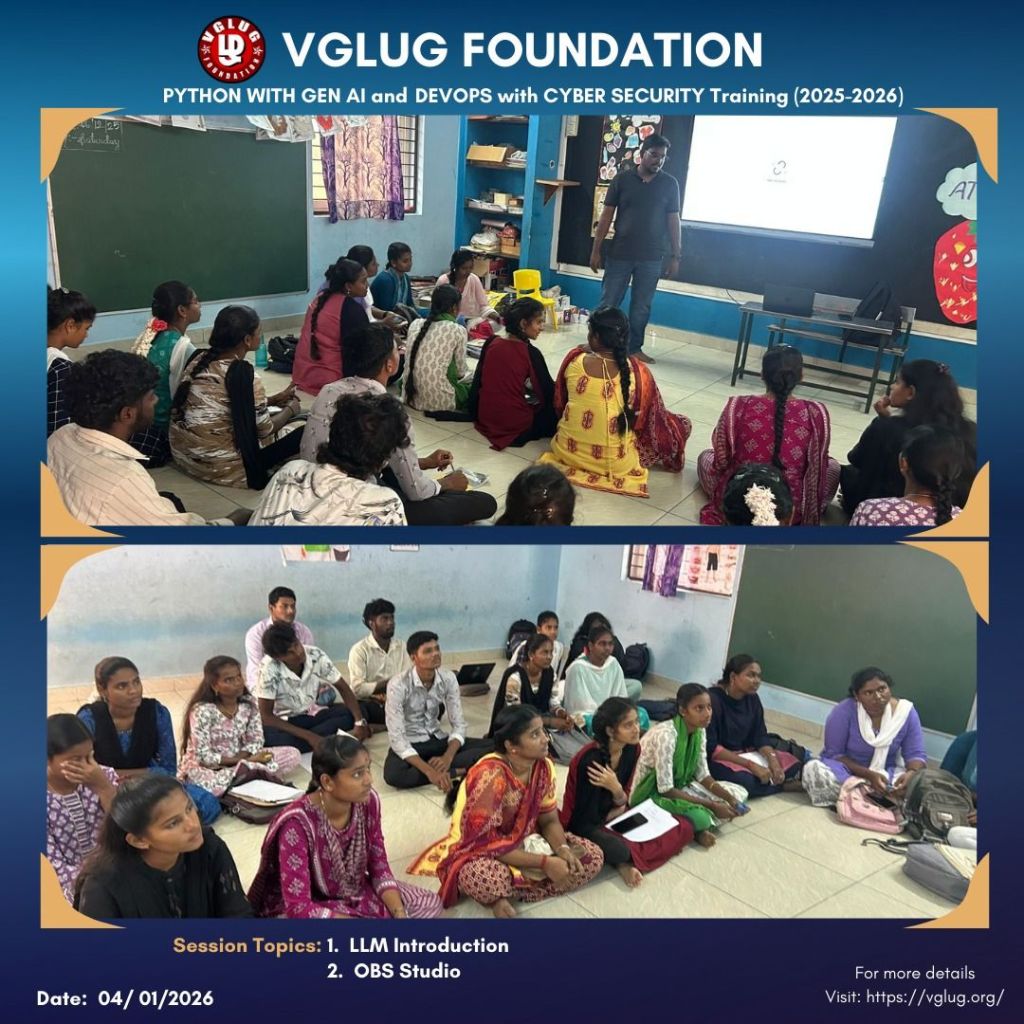
Python With GenAI – Richard Stallman and Aron Swatz(Arts) :
Session 1: LLM Introduction – Sathish Kumar & Deepak
Large Language Models (LLMs) are advanced Artificial Intelligence systems designed to understand, generate, and interact using human language.
They are trained on massive datasets that include books, articles, code, and web content, allowing them to learn language patterns and context.
LLMs use deep learning techniques, especially transformer-based neural networks, to predict and generate text.
They can perform tasks such as question answering, text summarization, translation, content creation, and code generation.
LLMs are commonly used in chatbots, search engines, customer support, education, and AI-driven tools, making human–computer interaction more natural and efficient.
Session 2: OBS Studio
OBS Studio (Open Broadcaster Software) is a free and open-source software used for screen recording and live streaming.
It allows users to record desktops, applications, webcams, and audio in real time.
OBS Studio is widely used for online classes, gaming streams, presentations, and content creation.
It supports multiple scenes, sources, and platforms like YouTube, Twitch, and Facebook Live.
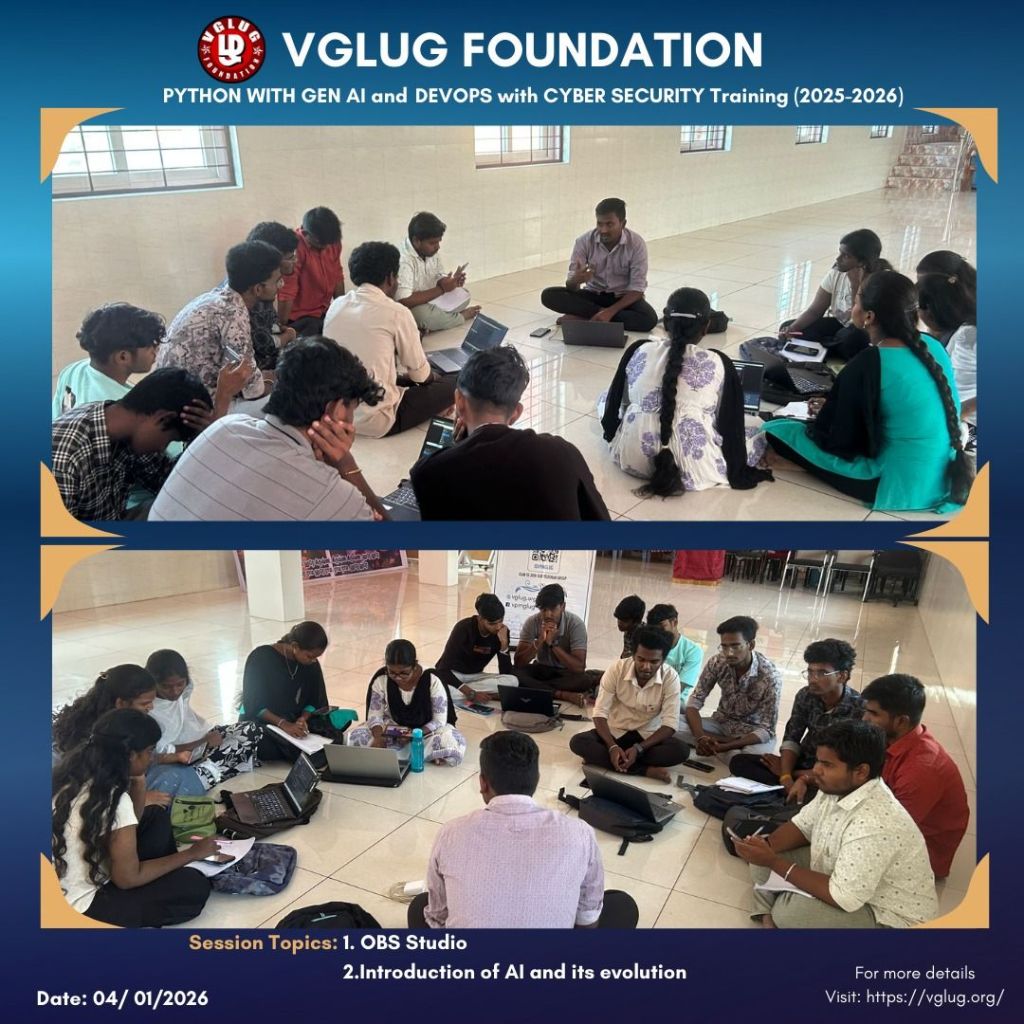
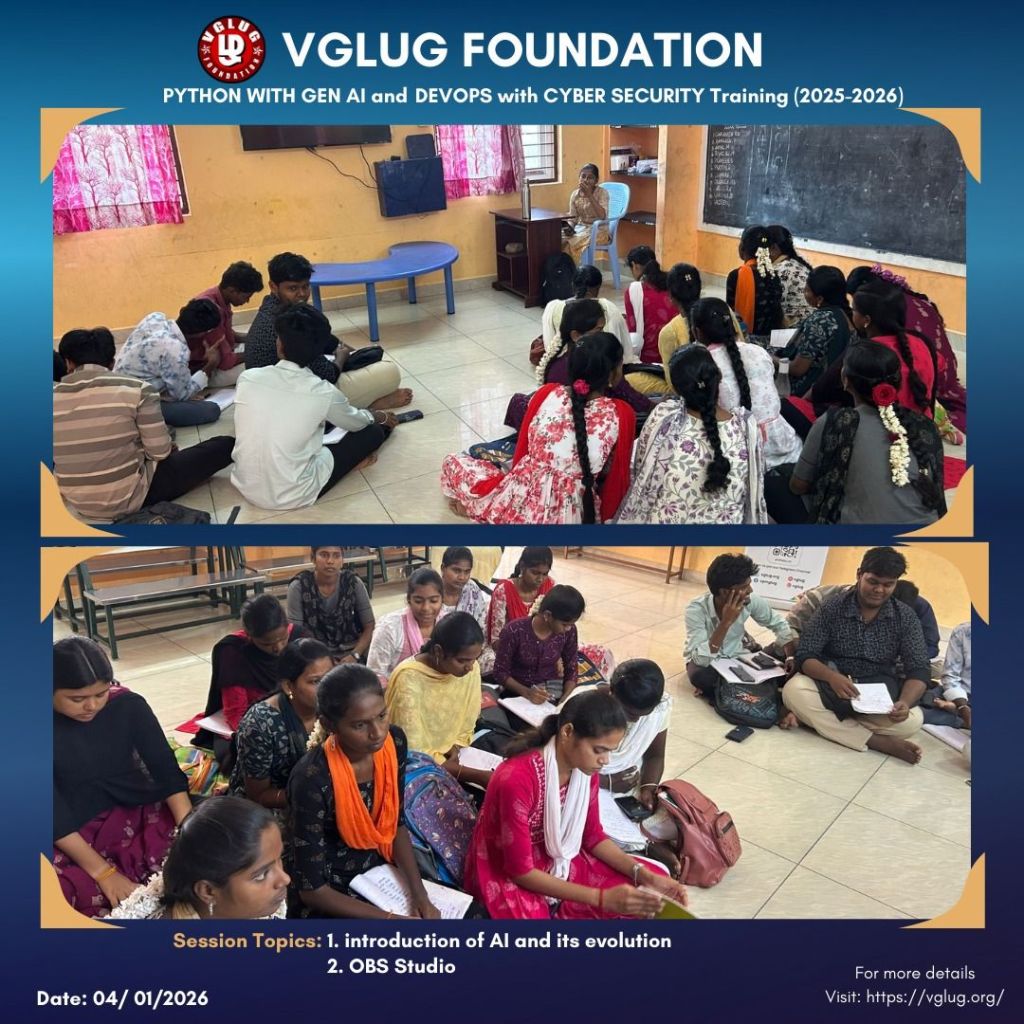
Python With GenAI – Linux Torvalds Team & Grace Hopper Team
Session 1: Introduction of AI and its Evolution – Kowsalya & Kanimozhi
Artificial Intelligence (AI) is a branch of computer science that aims to create machines capable of thinking, learning, and making decisions like humans.
In the early stages, AI systems were rule-based, following predefined instructions to solve problems.
1. Early AI (1950s–1970s)
AI began with simple rule-based systems. Computers were programmed with predefined rules to solve logical problems and play games like chess. These systems could not learn; they only followed instructions given by humans.
2. AI Winter (1970s–1990s)
Due to limited computing power, lack of data, and high expectations, AI progress slowed down. Funding and interest reduced during this period, which is known as the AI Winter.
3. Machine Learning Era (1990s–2010s)
AI evolved into machine learning, where systems started learning from data instead of fixed rules. Algorithms could identify patterns and improve performance over time. This period saw growth in applications like spam detection and recommendation systems.
4. Deep Learning Era (2010s)
With the availability of large datasets and powerful GPUs, deep learning emerged. Neural networks with multiple layers enabled breakthroughs in image recognition, speech recognition, and natural language processing.
5. Modern AI and LLMs (Present)
Today, AI includes Large Language Models (LLMs), computer vision systems, and autonomous agents. These models can understand context, generate human-like text, and perform complex tasks such as coding, translation, and decision-making.
Session 2: OBS Studio
OBS Studio (Open Broadcaster Software) is a free and open-source software used for screen recording and live streaming.
It allows users to record desktops, applications, webcams, and audio in real time.
OBS Studio is widely used for online classes, gaming streams, presentations, and content creation.
It supports multiple scenes, sources, and platforms like YouTube, Twitch, and Facebook Live.
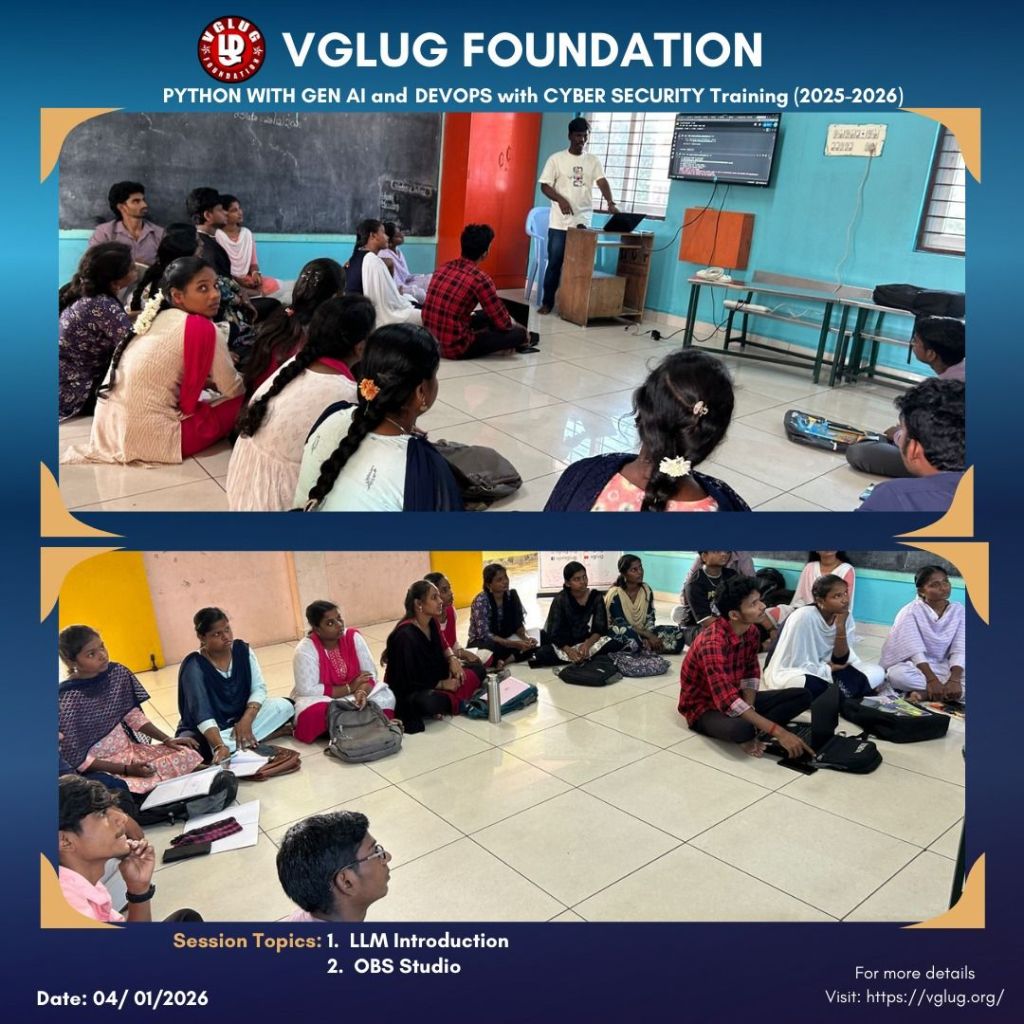
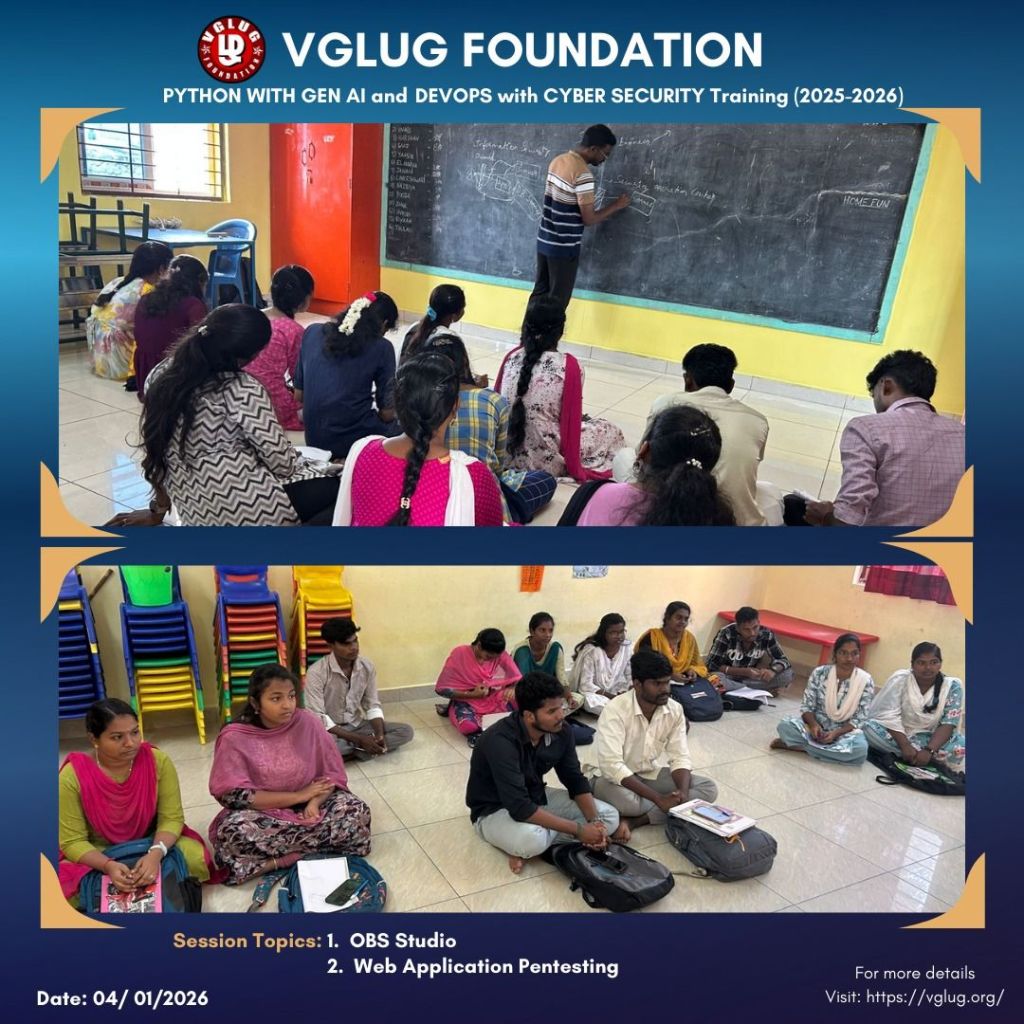
DevSecOps: Bob Thomas Team
Session 1:OBS Studio – Vasanthavel
OBS Studio (Open Broadcaster Software) is a free and open-source software used for screen recording and live streaming.
It allows users to record desktops, applications, webcams, and audio in real time.
OBS Studio is widely used for online classes, gaming streams, presentations, and content creation.
It supports multiple scenes, sources, and platforms like YouTube, Twitch, and Facebook Live.
Session 2: Web Application Pentesting
Web application pentesting (penetration testing) is the process of testing a web application to find security vulnerabilities before attackers do.
It involves checking the application’s front end, back end, and APIs for weaknesses.
Pentesters look for common issues like SQL Injection, Cross-Site Scripting (XSS), authentication flaws, broken access control, and insecure configurations.
The goal is to identify risks, understand their impact, and recommend fixes.
Web application pentesting helps improve security, protect user data, and ensure applications are safe for real-world use.
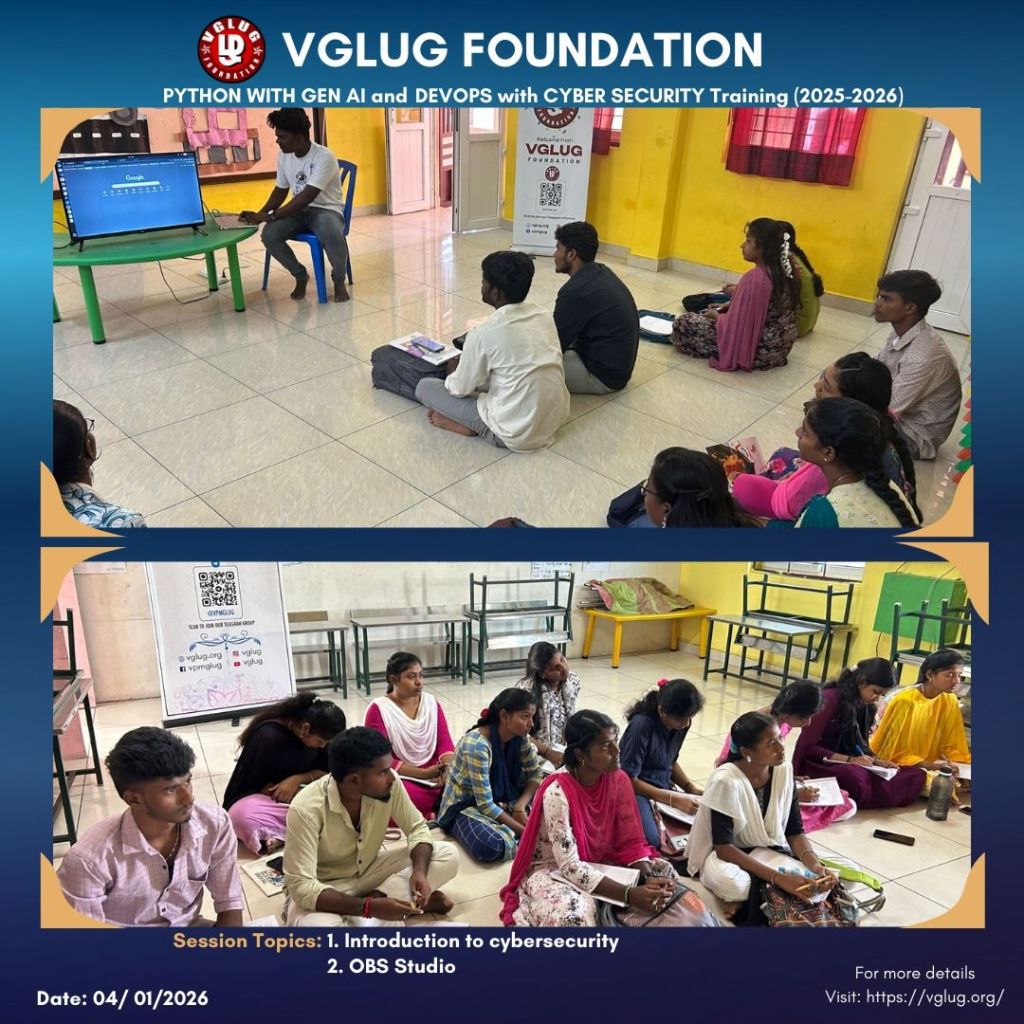
DevSecOps: Ada Lovelace Team
Session 1: Introduction ti Cybersecurity – Vignesh
Cybersecurity is the practice of protecting systems, networks, and data from cyber threats such as unauthorized access, attacks, and damage. It ensures that information remains safe while being stored, processed, and transmitted.
Cybersecurity is based on three core principles known as the CIA Triad:
Confidentiality (protecting data from unauthorized users), Integrity (ensuring data is accurate and not altered), and Availability (ensuring systems and data are accessible when needed).It covers multiple areas including network security, application security, endpoint security, and data security.Common cyber threats include malware, phishing, ransomware, and denial-of-service attacks.
Understanding cybersecurity helps individuals and organizations use technology safely and reduce security risks.
Session 2: OBS Studio – Vasanthavel
OBS Studio (Open Broadcaster Software) is a free and open-source software used for screen recording and live streaming.
It allows users to record desktops, applications, webcams, and audio in real time.
OBS Studio is widely used for online classes, gaming streams, presentations, and content creation.
It supports multiple scenes, sources, and platforms like YouTube, Twitch, and Facebook Live.
Special thanks to the VGLUG volunteers —
Vasanthavel, Dilip,Prathap, Kanimozhi, Sathish Kumar, Vignesh and Kowsalya— for their dedicated support and commitment to making these training sessions successful.

 VGLUG Foundation