
VGLUG is dedicated to empowering rural college students through technology education.
As part of this initiative, we conduct weekly training sessions on Python With GenAI and DevSecOps.
- Python & GenAI – Linus Torvalds(Team 1) & Grace Hopper(Team 2): Assigned to Engineering students
- Python & GenAI – Richard Stallman(Team 1) & Aron Swatz (Team 2): Assigned to Arts and Science students
- DevSecOps – Ada Lovelace (Arts) & Bob Thomas (Engg): Comprising both Engineering and Arts students
These sessions focus on practical knowledge of Python, GenAI, DevSecOps, free and open-source tools, and also include social awareness and community engagement activities.
Python With GenAI Training – 28’th Week Recap
Date: 01’st February 2026 (Sunday)
Time: 9:30 AM to 1:00 PM
Venue:
VGLUG Foundation
SRIMAA PRESCHOOL
Landmark: Opposite to BSNL Exchange
Villupuram 605602
Minutes of the Meeting
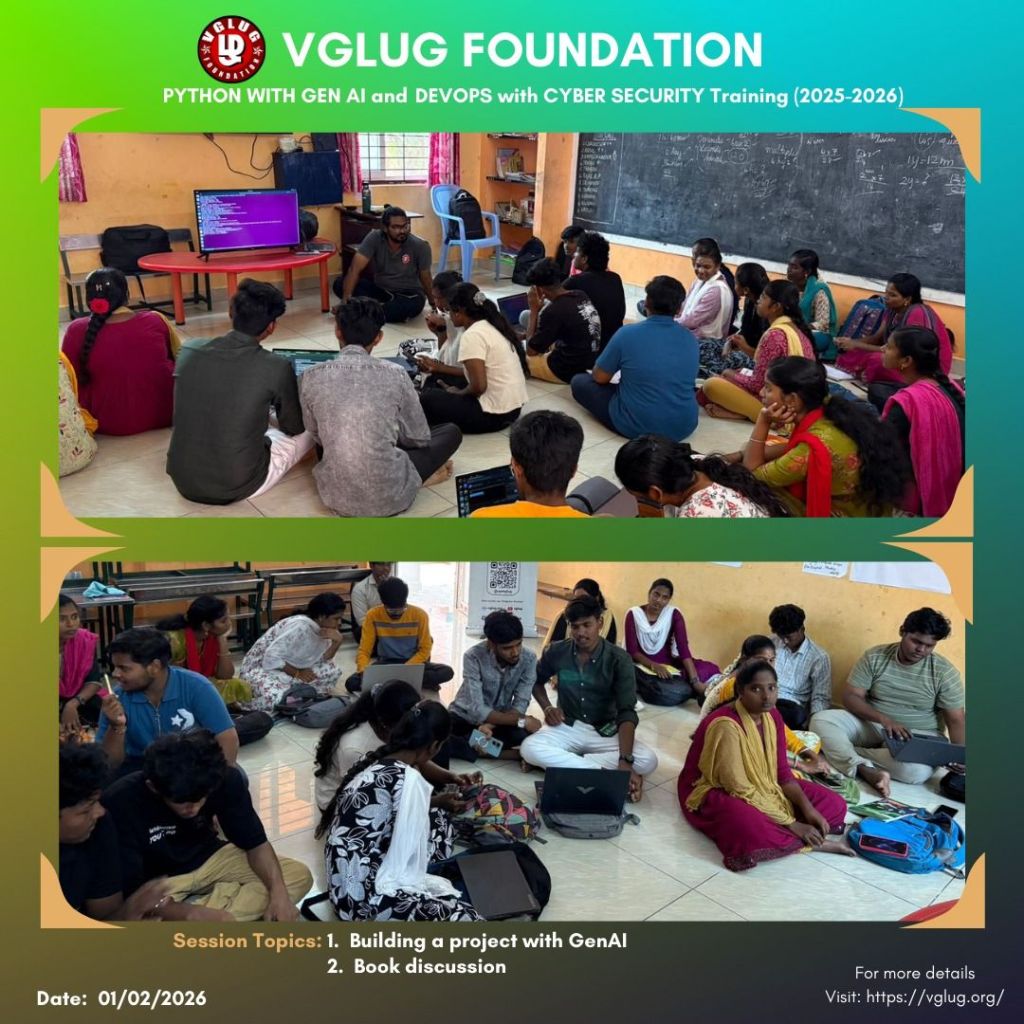
Python With GenAI – Richard Stallman and Aron Swatz(Arts) :
Session 1: Build a Project with GenAI-Sathis & Vasanthavel
Session 2: Book Reading – Dilip
We gave books to students to read and understand. After reading, they shared what they learned and explained the key ideas in their own words. This session helped improve their reading habit, confidence, and communication skills while encouraging independent thinking.
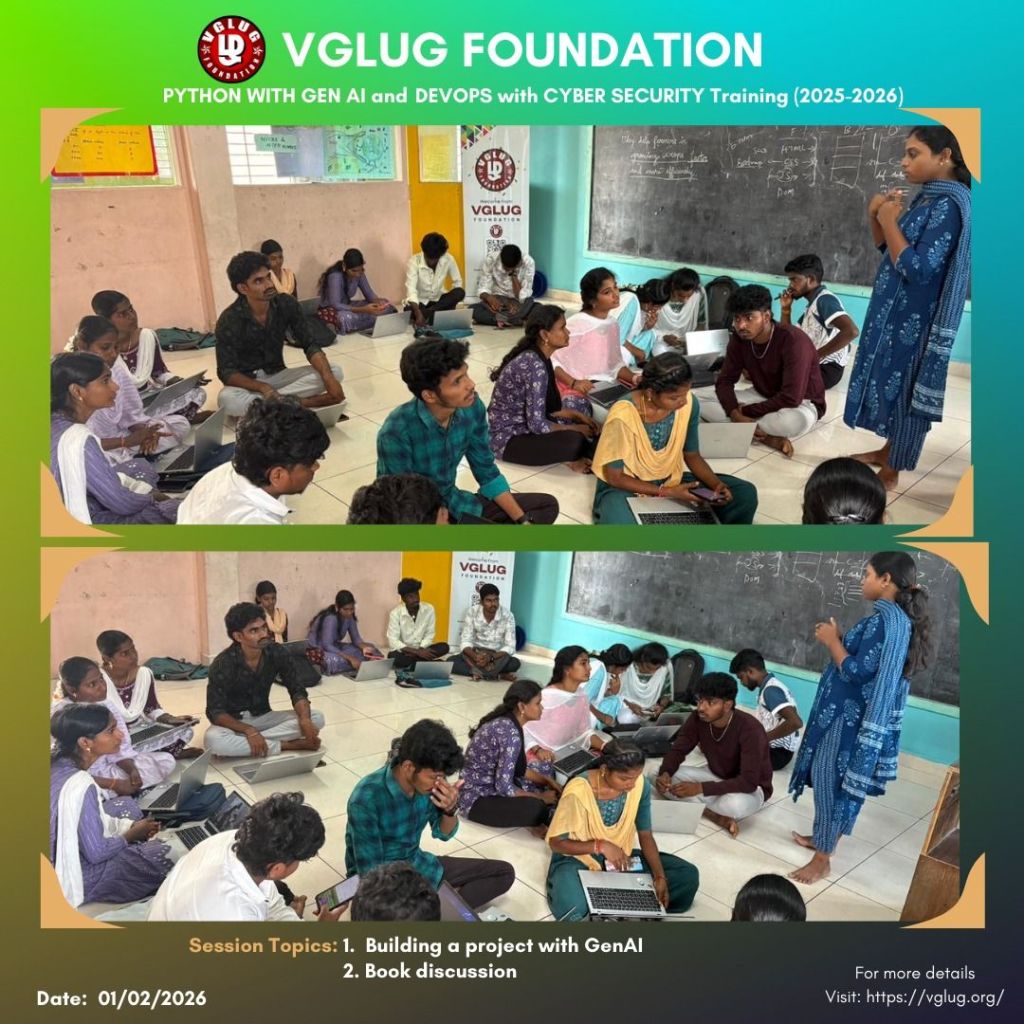
Python With GenAI – Linux Torvalds Team & Grace Hopper Team
Session 1: Build a Project with GenAI- Deepak & Vijayalakshmi
OOPS (Object-Oriented Programming System) is a style of programming that helps us think and code like real life.
A class is like a blueprint or template (for example, a “Car” design) that defines what data and actions it should have.
An object is the real thing created from that class (like an actual car made from the design).
Methods are actions or behaviors written inside a class that tell what an object can do (such as start, stop, or move).
OOPS makes code organized, reusable, and easier to understand and maintain.
Session 2: Book Reading – Kowsalya
We gave books to students to read and understand. After reading, they shared what they learned and explained the key ideas in their own words. This session helped improve their reading habit, confidence, and communication skills while encouraging independent thinking.
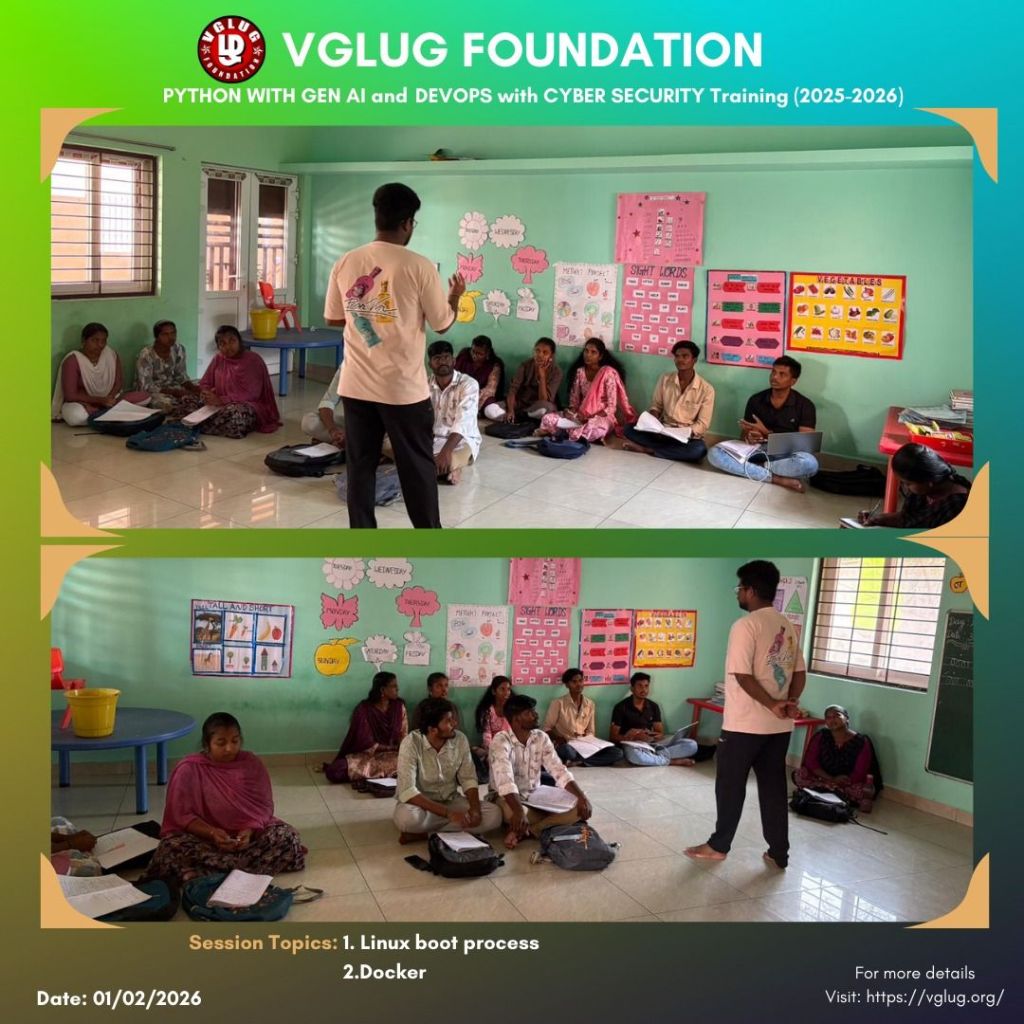
DevSecOps: Bob Thomas Team & Ada Lovelace
Session 1:Linux boot process & Network packet reception – Loganathan
Linux Boot Process:
The Linux boot process starts when the system is powered on and the BIOS/UEFI initializes the hardware components. The bootloader, usually GRUB, is then loaded to locate and load the Linux kernel into memory. The kernel initializes hardware, memory management, and device drivers, mounts the root filesystem, and starts the init system such as systemd. Finally, essential services are launched and the system reaches the login screen or graphical interface.
Network Packet Reception:
Network packet reception begins when a data packet arrives at the Network Interface Card (NIC). The NIC transfers the packet to the kernel using interrupts or polling mechanisms. The packet then moves through the Linux network stack, where protocol handling, routing, and firewall rules are applied. After processing, the packet is delivered to the correct socket, allowing the target application to receive and use the data.
Session 2: Docker – Mathusoothanan
Docker is a containerization platform that allows applications to run in isolated environments called containers. It packages the application along with its dependencies, libraries, and configuration into a single image. Docker containers are lightweight, start quickly, and share the host operating system’s kernel. Using Docker improves consistency across development, testing, and production environments. It is widely used to build, ship, and deploy applications efficiently.
Special thanks to the VGLUG volunteers —
Vasanthavel, Deepak, Loganathan, and Sathish— for their dedicated support and commitment


 VGLUG Foundation