
VGLUG is dedicated to empowering rural college students through technology education.
As part of this initiative, we conduct weekly training sessions on Python With GenAI and DevSecOps.
- Python & GenAI – Linus Torvalds(Team 1) & Grace Hopper(Team 2): Assigned to Engineering students
- Python & GenAI – Richard Stallman(Team 1) & Aron Swatz (Team 2): Assigned to Arts and Science students
- DevSecOps – Ada Lovelace (Arts) & Bob Thomas (Engg): Comprising both Engineering and Arts students
These sessions focus on practical knowledge of Python, GenAI, DevSecOps, free and open-source tools, and also include social awareness and community engagement activities.
Python With GenAI Training – 29’th Week Recap
Date: 08-02-206 (Sunday)
Time: 9:30 AM to 1:00 PM
Venue:
VGLUG Foundation
SRIMAA PRESCHOOL
Landmark: Opposite to BSNL Exchange
Villupuram 605602
Minutes of the Meeting
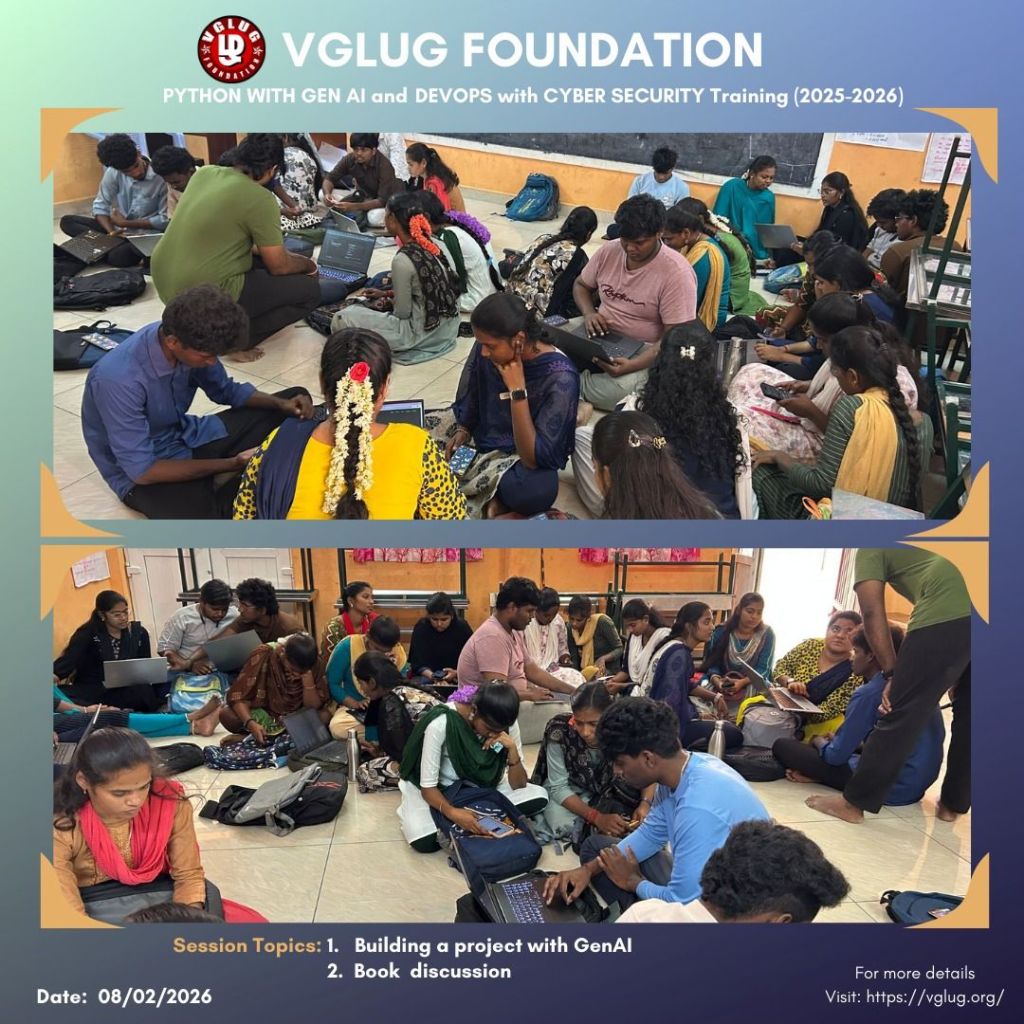
Python With GenAI – Richard Stallman and Aron Swatz(Arts) :
Session 1: Building a project GenAI – Vasanth & sathish
We are building a basic GenAI project where students are divided into small groups to encourage teamwork and collaborative learning. Each group is assigned a unique project name and problem statement related to Generative AI, such as chatbot development, content generation, or AI-based summarization. The goal is to help students understand GenAI concepts through practical implementation and presentation
Session 2: Book Discussion
We gave books to students to read and understand. After reading, they shared what they learned and explained the key ideas in their own words. This session helped improve their reading habit, confidence, and communication skills while encouraging independent thinking.
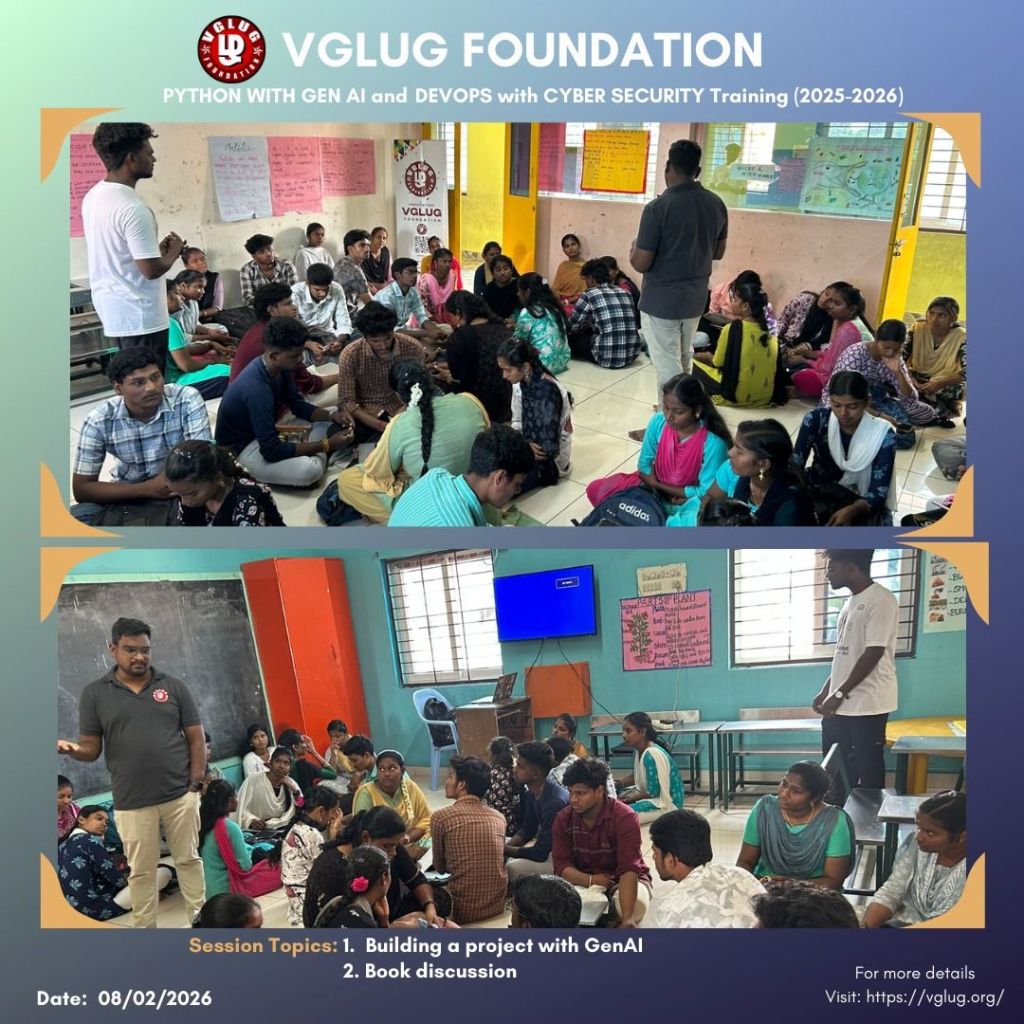
Python With GenAI – Linux Torvalds Team & Grace Hopper Team
Session 1: Building a project GenAI – Deepak
We are building a basic GenAI project where students are divided into small groups to encourage teamwork and collaborative learning. Each group is assigned a unique project name and problem statement related to Generative AI, such as chatbot development, content generation, or AI-based summarization. The goal is to help students understand GenAI concepts through practical implementation and presentation
Session 2: Book Reading –
We gave books to students to read and understand. After reading, they shared what they learned and explained the key ideas in their own words. This session helped improve their reading habit, confidence, and communication skills while encouraging independent thinking.
DevSecOps: Bob Thomas Team & Ada Lovelace
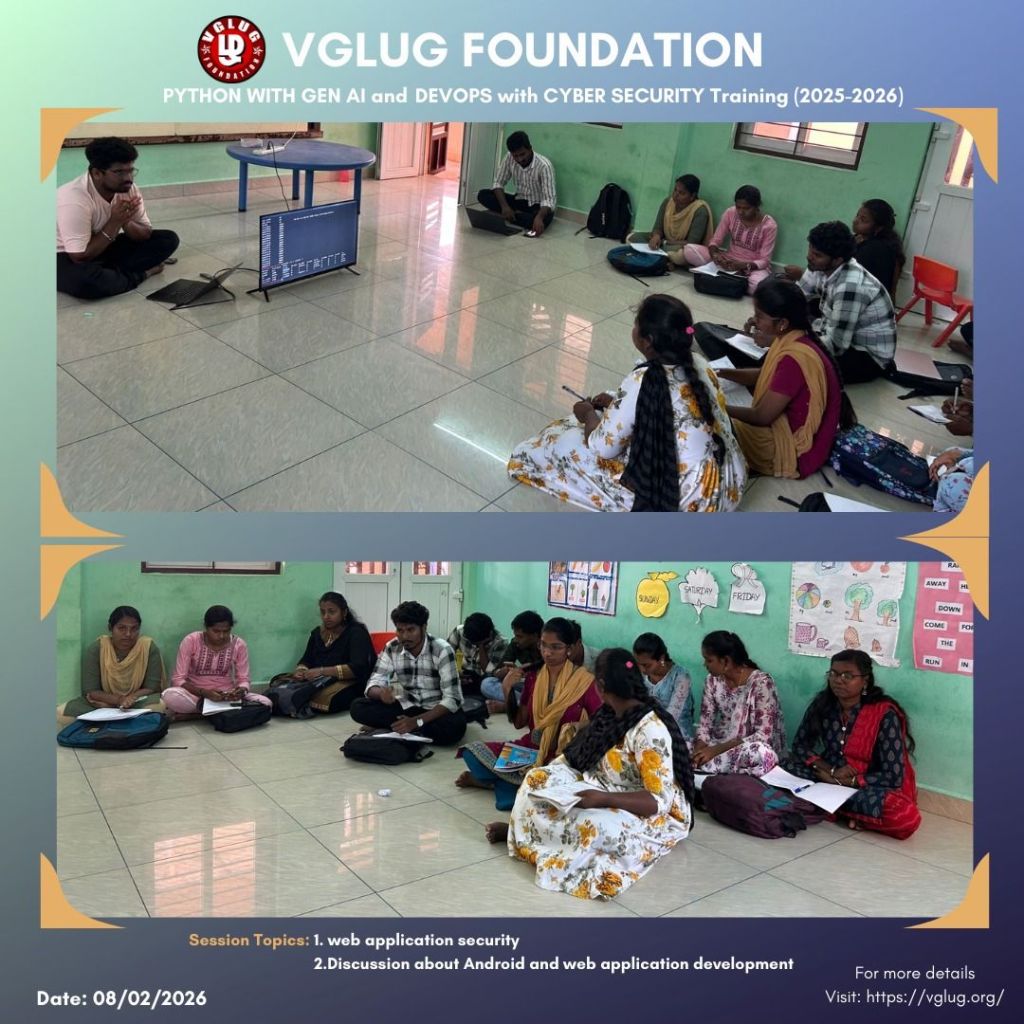
Session 1: Web Application Security- Vignesh
Web Application Security refers to the practice of protecting websites and online applications from cyber threats and vulnerabilities. It involves securing data, users, and systems from attacks such as SQL injection, cross-site scripting (XSS), cross-site request forgery (CSRF), and authentication bypass. Effective web security ensures confidentiality, integrity, and availability of information stored or processed by the application. Developers implement security measures like input validation, encryption, secure coding practices, and proper authentication and authorization mechanisms. Regular security testing, including vulnerability assessments and penetration testing, helps identify and fix weaknesses before attackers exploit them. Overall, web application security is essential to maintain user trust, protect sensitive data, and ensure smooth business operations in the digital world.
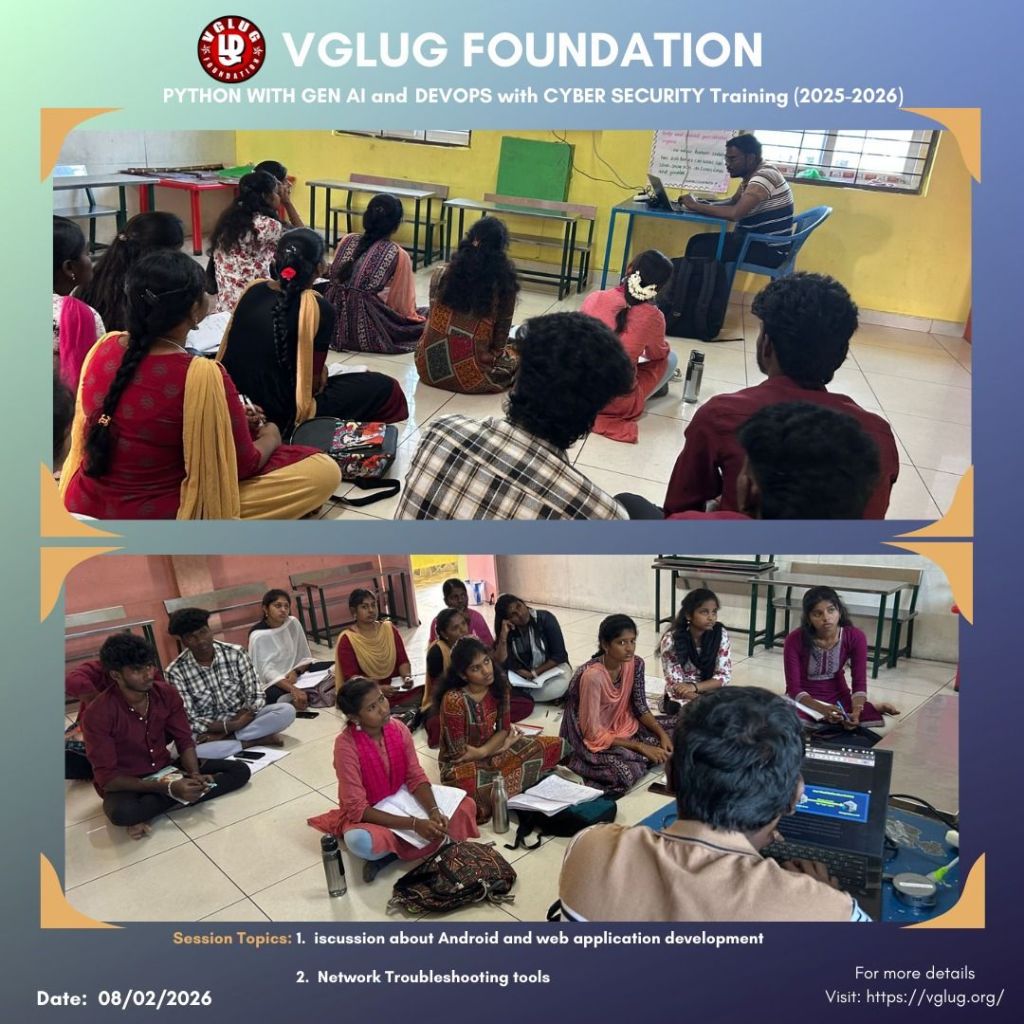
Session 2: Discussion About Andriod and Web Application – Prathap
A discussion about Android and Web Applications mainly focuses on their development approach, performance, user experience, and use cases. Android applications are built specifically for Android devices using languages like Java or Kotlin in Android Studio, and they can access device features such as camera, GPS, sensors, and offline storage more efficiently. These apps are downloaded from platforms like Google Play Store and generally provide better performance and a richer user experience.
On the other hand, Web applications run in browsers like Google Chrome and are built using technologies such as HTML, CSS, and JavaScript. They do not require installation and can be accessed through a URL on any device with an internet connection. Web apps are easier to maintain because updates are deployed on the server side and instantly available to all users. However, they may have limited access to device hardware compared to native Android apps.
In summary, Android apps are ideal for high performance and deep device integration, while web applications are better for cross-platform accessibility and easier maintenance.
Special thanks to the VGLUG volunteers —
Vasanthavel, Prathap, Mathusoothan, Sathish and Deepak— for their dedicated support and commitment
to making these training sessions successful.

 VGLUG Foundation